Provincial Licensing Quirks and Their Overlooked Effects on Sound Design Choices in Wheel Game Apps
Eden Coleman · Sep 28, 2026
Provincial Licensing Quirks and Their Overlooked Effects on Sound Design Choices in Wheel Game Apps
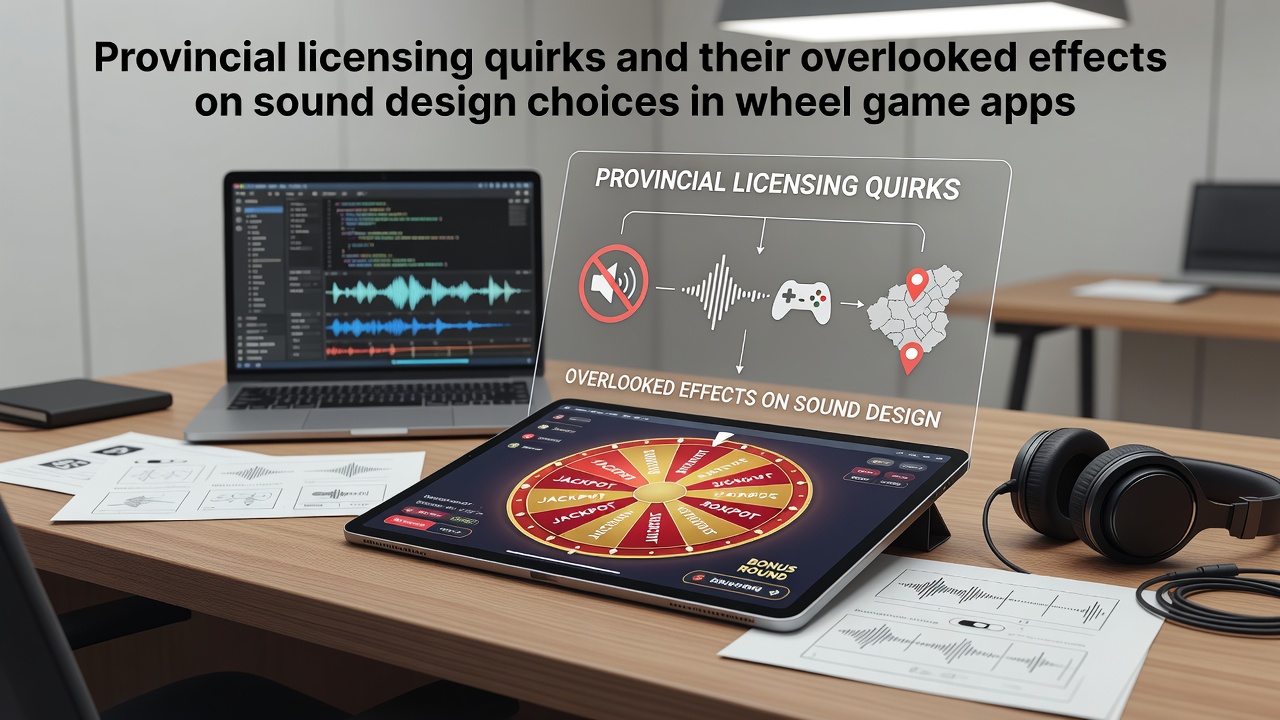
Provincial licensing frameworks across Canada create distinct requirements that shape how developers approach audio elements in wheel game applications, and these rules often extend beyond basic compliance into the technical architecture of sound files themselves. Different provinces maintain separate regulatory bodies that enforce standards on player interaction features, and this leads to variations in how background tracks, win chimes, and notification tones get implemented. Observers note that Ontario's framework under the Alcohol and Gaming Commission of Ontario emphasizes integration with responsible gambling tools, while British Columbia and Quebec apply their own sets of guidelines through the British Columbia Lottery Corporation and the Régie des alcools, des courses et des jeux respectively.
Regulatory Differences Across Provinces
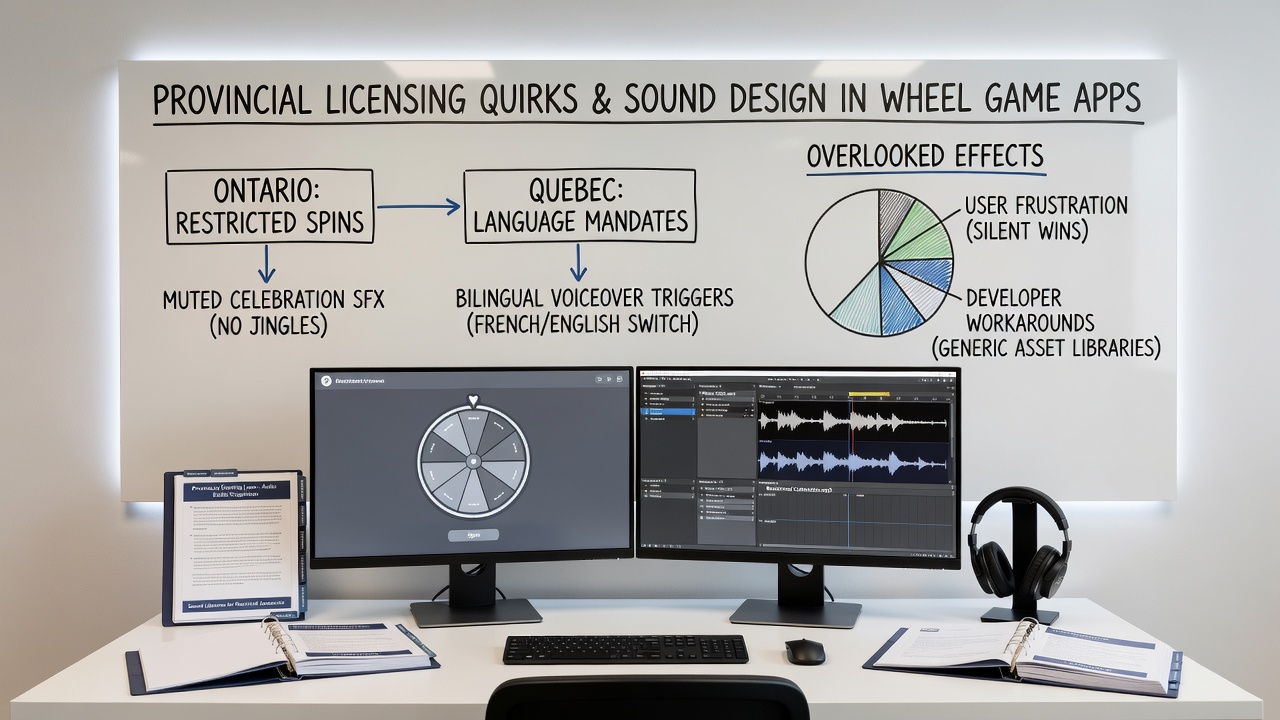
Licensing conditions in Ontario require that apps support customizable volume controls tied to session time limits, and this forces sound designers to build layered audio tracks that adjust dynamically without disrupting the core gameplay loop. In contrast, Quebec's approach focuses on language localization mandates that extend to audio prompts, meaning developers must prepare French-language voiceovers and effect libraries that sync precisely with visual wheel spins. Data from provincial compliance reports shows these adjustments occur more frequently in multi-jurisdictional releases, where a single codebase must accommodate multiple audio configurations. Researchers at Canadian institutions have documented how such fragmentation increases development cycles by several weeks during certification phases.
Impact on Audio Asset Creation
Sound designers working on wheel game apps routinely prepare separate asset packages because licensing quirks dictate specific constraints on frequency ranges and repetition patterns. One common adjustment involves capping the duration of celebratory audio sequences in provinces that link sound exposure to player break reminders, and this results in shorter, more modular sound libraries that loop cleanly at lower volumes. Figures from the Canadian Gaming Association reveal that apps targeting multiple provinces carry between 30 and 50 percent more audio files than single-jurisdiction titles, primarily to meet these localized standards. Developers therefore build conditional loading systems that detect the user's province at launch and swap audio sets accordingly.
September 2026 marks the scheduled rollout of updated accessibility directives in several provinces, and these changes require wheel game apps to include audio descriptions for visual events such as wheel segments landing on specific numbers. Compliance teams have already begun testing text-to-speech integration that activates alongside traditional sound effects, creating hybrid audio layers that maintain clarity across device speakers and headphones. The shift expands the scope of sound design beyond entertainment into functional communication, and provincial regulators continue to refine testing protocols ahead of the deadline.
Technical Implementation Challenges
Engineers address these licensing variations by embedding province-specific flags within app configuration files, allowing the audio engine to select appropriate mixes without requiring separate app store submissions. This method reduces maintenance overhead while satisfying each regulator's documentation demands, yet it demands precise synchronization between visual animations and their corresponding audio cues. Studies from academic research groups indicate that mismatched audio-visual timing ranks among the top issues flagged during licensing reviews. Teams therefore conduct province-by-province QA passes focused exclusively on sound synchronization and volume thresholds.
Player Experience and Compliance Data
Analytics collected by provincial operators demonstrate measurable differences in session patterns when audio features align with local rules, and these patterns influence how future updates prioritize certain sound elements over others. Apps that preload adaptive audio profiles report fewer certification delays, while those relying on generic sound packs encounter repeated revision requests. Industry reports from the Canadian Gaming Association highlight that sound-related compliance items now appear in over 40 percent of licensing submissions for wheel game titles. Developers respond by maintaining detailed change logs that track every audio modification tied to a specific provincial requirement.
Conclusion
Provincial licensing continues to steer sound design decisions in wheel game apps through a combination of technical mandates and documentation requirements that differ by jurisdiction. Developers maintain flexible audio systems that accommodate these variations, and the upcoming September 2026 accessibility updates will add another layer of complexity to an already segmented process. Data from regulatory bodies and industry associations shows that these adaptations remain an ongoing aspect of app production rather than a one-time effort, with each province contributing its own set of constraints that shape final audio implementations.