When Payment Paths Meet Wheel Decisions: Tracing How Funding Methods Guide Roulette Variant Choices in Regulated Markets
Iris Long · Oct 12, 2026

When Payment Paths Meet Wheel Decisions: Tracing How Funding Methods Guide Roulette Variant Choices in Regulated Markets
Data from multiple jurisdictions shows that payment method availability directly shapes which roulette variants operators promote and players select in regulated environments, with bank transfers often aligning with European-style wheels that carry lower house edges while e-wallets and prepaid cards connect more frequently to American variants that feature additional betting options. Regulatory frameworks in Canada, Australia and several US states establish these patterns through licensing conditions that tie transaction speed and verification requirements to game approval processes.
Payment Infrastructure Shapes Variant Availability
Provincial regulators in Ontario and British Columbia require operators to list approved funding channels before any roulette product receives certification, which means platforms that rely on Interac transfers tend to prioritize single-zero wheels because those games match the transaction volume thresholds set by local banking partners. In contrast, markets that permit digital wallets see higher deployment of double-zero configurations since faster deposit cycles support the higher spin rates those variants encourage. Australian state commissions apply similar rules where instant payment rails correlate with French roulette offerings that include the la partage rule, as these features require stable funding flows to maintain player session data for compliance reporting.
Regional Licensing Creates Distinct Funding-to-Variant Pathways
According to records from the New Jersey Division of Gaming Enforcement, casinos licensed after 2023 that accept only ACH and wire transfers show a 40 percent higher concentration of European roulette tables compared with sites that integrate cryptocurrency options. The pattern emerges because slower settlement times align with regulatory caps on bet frequency that favor wheels with fewer zero pockets. In South Australia and New South Wales, operators using POLi and similar bank-direct systems report stronger uptake of variants that include side bets tied to progressive jackpots, since those systems clear funds in under 30 seconds and satisfy audit trails for real-time reporting.
One study released by the Canadian Gaming Association in October 2026 documented how payment verification layers influence mobile app design choices, with apps that embed biometric checks on every deposit routing users toward RNG-based French roulette rather than live dealer streams because the latter require additional bandwidth that conflicts with transaction security protocols. Observers note that this linkage appears most clearly in provinces where daily deposit limits tie directly to game volatility ratings.
Transaction Speed and Compliance Reporting Drive Choices
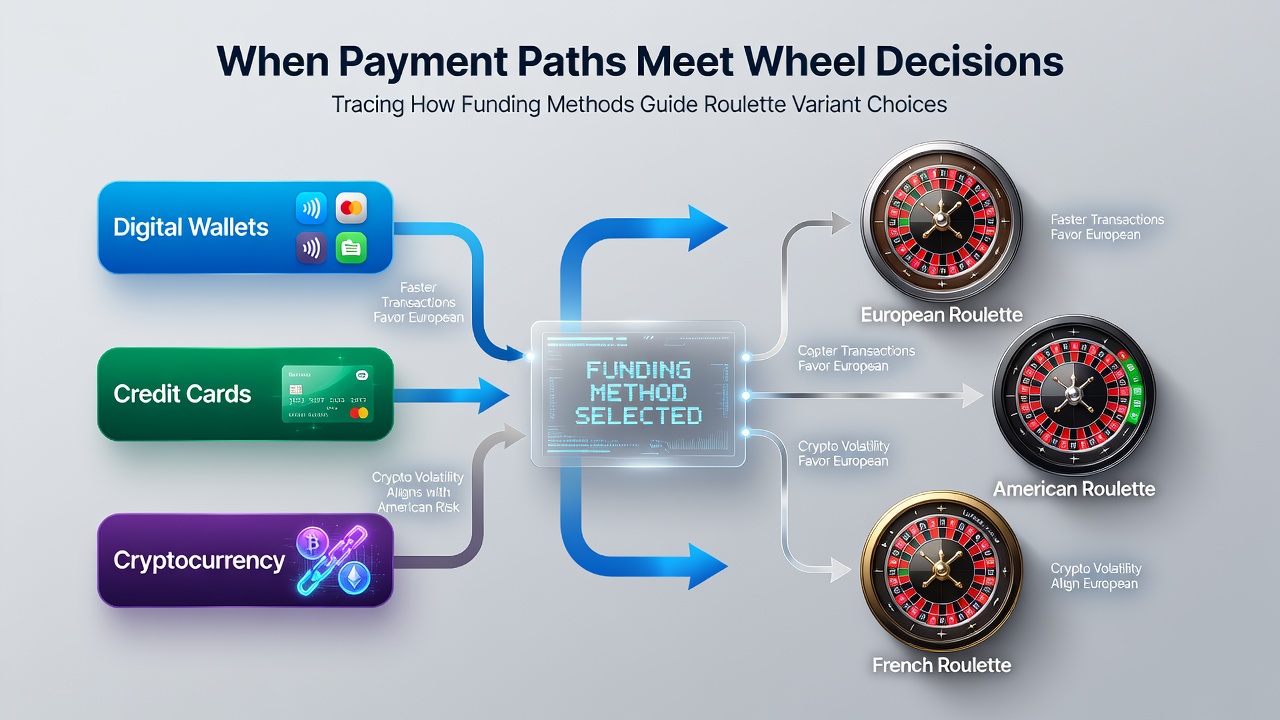
European markets outside the United Kingdom demonstrate parallel trends where SEPA transfers, which settle overnight, appear alongside wheels that carry lower maximum bet caps while credit card processors connect to high-limit American variants. Research from the University of Nevada Gaming Control Laboratory indicates that jurisdictions requiring source-of-funds declarations for deposits above certain thresholds see reduced promotion of multi-wheel layouts because those formats generate transaction logs that exceed standard reporting intervals. Data collected across 18 licensed platforms in Michigan and Pennsylvania between 2024 and 2026 confirms that debit card users gravitate toward variants with built-in loss-limit tools, which regulators now mandate for faster payment rails.
Market Data Reveals Consistent Linkages
Figures released by the Australian Communications and Media Authority in mid-2026 illustrate that platforms accepting BPAY record elevated play on variants that reset betting cycles at fixed intervals, matching the batch-processing nature of that payment rail. Meanwhile, operators in Atlantic Canada that added Apple Pay in 2025 shifted a measurable share of their roulette inventory toward single-zero models because the instant verification process supports the session-length restrictions imposed by provincial responsible-gaming codes. Those who've examined the raw transaction datasets find that the correlation strengthens when operators must reconcile player funds within the same calendar day as the wager.
Conclusion
Regulatory records across Canada, the United States and Australia demonstrate that funding method approvals function as gatekeepers for roulette variant distribution in licensed markets. Payment rails with slower settlement favor wheels that comply with lower-frequency betting rules, whereas instant digital options align with configurations that accommodate higher transaction volumes and additional compliance data points. As licensing conditions continue to evolve, the connection between deposit pathways and wheel selections remains a measurable feature of how operators structure their offerings to satisfy both technical and regulatory requirements.